











“Errand of Mercy”
Written by Gene L. Coon
Directed by John Newland
Season 1, Episode 26
Production episode: 1x 27
Original air date: March 23, 1967
Star date: 3198.4
Mission summary
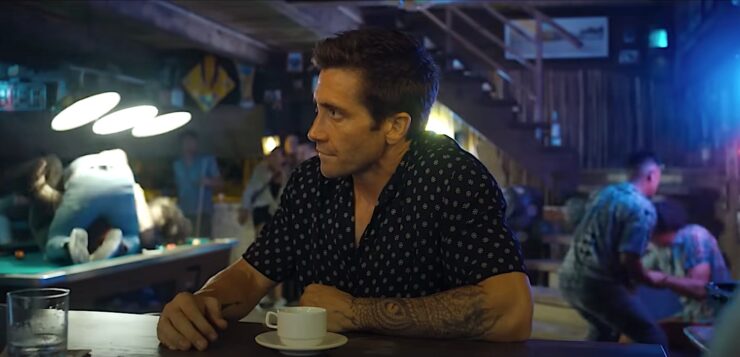
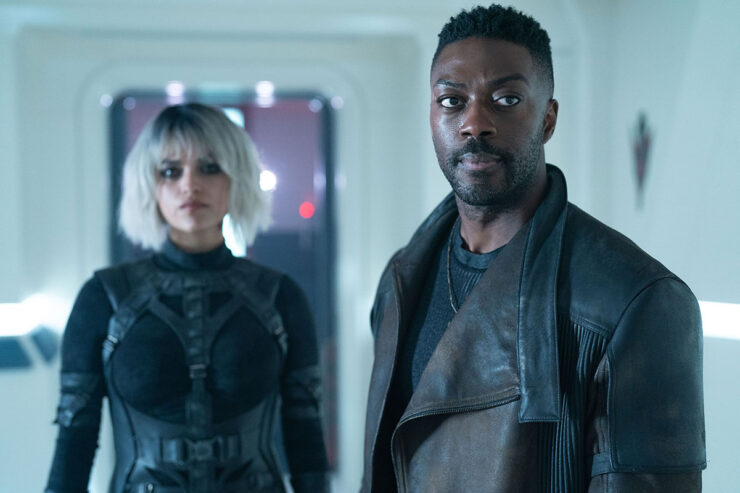
Peace talks between the Federation and the Klingon Empire are breaking down, so the Enterprise is ordered to Organia, which isn’t a sex resort like it sounds, but a planet of “peaceful, friendly people living on a primitive level.” Actually, that still sounds like a sex resort, doesn’t it? Organia’s only value is its strategic military location; Kirk compares it to Armenia and Belgium in Earth’s history, “the weak innocents who always seem to be located on the natural invasion routes.” They must reach the planet before the Klingons and prevent them from establishing a base there. Starfleet Command’s communique also mentions the possibility of a surprise Klingon attack. Not long after decoding this message, the Enterprise is indeed attacked, but they quickly destroy the enemy ship. The debris hasn’t even cleared before they receive a code one alert from Starfleet. “Well, there it is,” Kirk says. “War. We didn’t want it, but we’ve got it.” And without a store receipt, they can’t even exchange it for something they do want. Committed to their duty, they set course for Organia at warp seven.
This is going to be a sickeningly quick series of blog posts as I attempt to make an eight-minute vampire movie in twelve days, using only what I can borrow from the office and bribe my friends into doing. At stake, so to speak, is $1000 in prize money and, now that I’m telling you all that I’m going to do it, my honor. This is the contest; entrants are invited to make their own episode of the vampire web series The Hunted. The deadline is next Sunday.
Everyone’s heard “write what you know.” Young adult author Tamora Pierce once offered the alternative “write who you know,” which has stood me in good stead with this project: two people have agreed to play the characters based on them. My roommate Gina will star as the stage manager of a production of Macbeth, and Dan is coming up from Philly to play the show’s director; Dan directed King Lear and Julius Caesar for our college troupe. My other roommate and fellow Tor.com blogger Nina Lourie will be a loverly Lady Macbeth and my capoeirista friend Mendez will play the actor playing Macduff. So much for them!
This leaves me with four small speaking parts and two leads. In the initial round of e-mails, we got close to getting our dream actor for Macbeth, but he had a conflict come up. So sad. I'm also talking to another friend about one of the smaller parts, trying to woo her with the promise of chocolate chip cookies. Our other friends are A) busy, with apologies or B) incommunicado, so waaaay too late I bit the bullet and posted an ad on Craigslist.
Hey-o, Independent people! Welcome to a totally free and brave and amber-waved Wheel of Time Re-read post! In honor of the holiday weekend, please pretend that this entry is hung about with red, white, and blue crepe paper. And that it occasionally explodes.
Or, if you are un-American, you can alternately pretend it will be covering Chapters 39-40 of The Fires of Heaven. Though actually the title is very appropriate for the occasion!
Previous entries are KA-BOOM! This and all other BANG! contain spoilers for all currently published CRACKLE! in the Wheel of Time ZEEEER-POP! So if you haven’t read, don’t –
Hm. Dud.
Oh well. Here, have a hot dog – and some incendiary commentary!
[Uncle Sam wants YOU to click this link! But don’t let that stop you.]
Not all writers bemoan the existence of television as a corrosive force inevitably at odds with book reading. I’m not afraid to admit that I love television! Well, let me restate that. I love good television. There certainly is an overwhelming amount of junk food programming out there. I’ve never been able to stomach most reality shows (though Wipeout cracks me up and Project Runway is creative). I can no longer sit through serialized crime dramas. They’re all the same thing now. They use the old formula but throw in some of the disturbing imagery that was once groundbreaking when we saw it in Millennium. So when I find a show that pulls me in, I become pretty loyal and greatly frustrated when typically, it gets cancelled.

Invasion was one such show. The series aired at the time I was writing Zombie Blondes and it was far and away my favorite new show of the season that year. It was one of several shows that got the green light after the initial success of Lost. There was a whole wave of these continuous story type programs to hit the networks that fall. Most of them weren’t any good, but I thought Invasion was extremely well done. I sort of forgot how good it was, but thanks to the Chiller cable channel, which has been re-running the show the past few weeks, I’m remembering.
Next up on the Lord of the Rings re-read, chapter III.4 of The Two Towers, “Treebeard.” I think this may be my favorite chapter to date, or at least the one I enjoyed most.
Spoilers for all of LotR and comments after the jump.
I the first part of my review, I wrote about the werewolf poem-novel Sharp Teeth by Toby Barlow. In it, he writes: “still conscious, a little hungrier. / It's a raw muscular power, / a rich sexual energy / and the food tastes a whole lot better.” This would have fit in great in Breathers (Broadway Books).
Warning! This post will contain spoilers. Since zombies are involved, this is inevitable.
I remember a few years back reading Mary Roach’s Stiff: The Curious Lives of Human Cadavers, thinking, “Some day, a sharp fiction writer is going to put all this info to good use.” That’s exactly what S.G. Browne has done with Breathers. This is no great insight on my part; he’s said as much several times. But even if he hadn’t, I would have recognized her ideas in his work: plastic surgeons practicing on severed heads, formaldehyde in cosmetics, fun stuff like that.
While the occasional reference to this or that familiar scientific use of cadavers was no shock, plenty in Breathers took me by surprise. Funny to say, but in a book about zombies, the best bits weren’t about rotting or eating yummy brainses. Breathers is about empowerment and identity. Through eating people.
[I crave your mouth, your voice, your hair. Silent and starving, I prowl through the streets.]
A couple of weeks ago it was announced that Joe Hill’s Gunpowder is on the short list for the British Fantasy Award. If there is any justice, this great science fiction novella will win, and other awards will follow from this side of the pond.
I like novellas best. I have friends who just love to sit down with big, fat novels and who become addicted to series. I have other friends who love short stories, who say they just don’t have time to devote to a “whole book.” Of course, I have other friends (curse them) who don’t read at all. I read short stories and big books and even, occasionally, series, but I like novellas best.
For me, 20,000-25,000 words is just the right length for a science fiction or fantasy story, long enough for the author to establish a plot and develop a charismatic character, or even several, but short enough that I haven’t forgotten those characters’ names as I approach the climax. I can usually read the tale in one sitting, so I don’t let the vicissitudes of life get in the way. And I know that, when I reach the end, I won’t be surprised to discover that I need to read the next volume to find out what happens to those characters.
Unfortunately, it seems most major publishers don’t agree with me. And, in these economic times, many book buyers are even more concerned with the cost per page than the quality of what they read, so the fiscal reality is that not many novellas see print, except those published by (all gods bless them) small presses.
SF author Kage Baker, whose latest novel is The Empress of Mars (Tor Books), told Tor.com that the book has its origins in the fact that her sister, who ran a small sort of ad hoc tavern for actors, ran into some difficulties with certain corporate lackeys who shall remain nameless.
“I had always been drawn to the idea of writing a story set on Mars, and I thought it might be fun to write about Kate’s tavern in science fictional terms,” Baker said in an interview. “Then someone gave me a copy of Vaughn Williams’ Sinfonia Antarctica, which is perfect music for envisioning the Martian landscape. It all came together.”
The novel tells the story of what happens when Mars is colonized by a corporation that then goes bankrupt. “Such things have happened before—busted corporations stranded a lot of 17th-, 18th- and 19th-century colonists in remote parts of the world,” Baker said. “The colonists on Mars are stuck up there with no money to come home, and their situation is not exactly desperate but certainly squalid. One woman makes ends meet by keeping a bar and bartering for goods. Then she finds a diamond and becomes the richest woman on the planet. Everything changes.”
Air (St. Martin’s) is one of the best and most important books so far of the present century. I’ve been a fan of Geoff Ryman’s for years, so I read this as soon as it came out. Even expecting it to be good, I was blown away by it, and it only gets better on re-reading.
Mae lives in a tiny village high in the hills of the imaginary Silk Road country of Karzistan. People in her village are Chinese, Muslim and Eloi. She makes a living by knowing about fashion. It’s the near future, and Air is coming—Air is pretty much internet in your head. Mae has an accident while Air is being tested and winds up getting her ninety-year-old neighbour Mrs Tung’s memories in her head. The book is about the things all literature is about, what it means to be human and how everything changes, but it’s about that against a background of a village that’s the last place in the world to go online. Ryman draws the village in detail, and it all feels real enough to bite—the festivals, hardships, expectations, history, rivalries and hopes.
Air won the Tiptree Award, and even though I really liked it and was glad to see Ryman getting some recognition, I couldn’t figure out why. The Tiptree Award is for books that say something about gender, and I couldn’t see what Air was saying about gender, particularly. On re-reading, I think what it’s saying about gender is that it’s OK to have SF novels about middle aged self-willed Chinese women whose concerns are local and whose adventures are all on a small scale. I think I didn’t notice that because I never had a problem with that being OK, but it is unusual, and it’s one of the things that delighted me about the book.
[Read more: I had been afraid it was for the one thing for which I couldn’t suspend my disbelief.]
This is going to be a sickeningly quick series of blog posts as I attempt to make an eight-minute vampire movie in twelve days, using only what I can borrow from the office and bribe my friends into doing. At stake, so to speak, is $1000 in prize money and, now that I’m telling you all that I’m going to do it, my honor. This is the contest; entrants are invited to make their own episode of the vampire web series The Hunted. The deadline is next Sunday.
Step 1: Research
When I first thought I’d go for the contest, I watched enough of The Hunted’s existing material to know that I could never touch their level of martial arts, but I felt like I could make up for it by having a script. With, like, an arc and stuff. Maybe some jokes. I did not, however, comb through the whole series taking notes; I was afraid that if I had their frame and scope in my head, I would only be able to rehash what they had done. I’m now second-guessing this decision, but it made sense at the time.
Step 2: Inspiration
My roommate Gina is a stage manager, and the very night I read about the contest, she was fretting about getting her actors to fill out emergency medical forms. A single line of dialogue popped into my head: “You know, ‘vampire’ is the kind of thing you should write on your emergency medical form.”
In this post I will question the nature of spoiler warnings and whether or not they are justified. Hmm. Did I just give away my whole idea? Oops.
I understand the need for spoiler warnings and dislike the necessity. I’m not quite sure who came up with the idea, but I’d like both to thank and smack them. Thank, because it’s kept me from finding out secrets I didn’t want revealed. Smack, because there’s something inherently absurd with thinking you can read a review of a book or film without something getting revealed. I mean, come on. It’s a review.
A mysterious girl in the royal extended family, some say a demon because of disturbing markings around her eyes, is banished from the palace. A very young prince discovers her living in the gardens on the kindness of servants.
Like all princes, even ones that don’t reach the waist of their eldest sister, he wants to save her. But the only way to remove the demon’s markings from her eyes is for her to tell, bit by bit, the stories written upon them.
Thus begins The Orphan’s Tales, a well-woven tapestry of fairytales-within-fairytales in the world of Ajanabh, both like and unlike its inspiration, The Arabian Nights.
The stunning Orphan’s Tales, by Catherynne M. Valente, is a two book work (in the way that Lord of the Rings is a three volume book), comprised of In the Night Garden and In the Cities of Coin and Spice (both Spectra Books). Her writing is a study in classicism—the rich retooling of stories either centering around or inspired by a wide variety of classics, from Asian folklore like Japan’s The Grass-Cutting Sword to fairy tales from England to Germany, from Norway to Russia, from the Middle East to Africa. The versatility of Valente’s knowledge shines bright as stars.
[And needing to know what happens next will drive you mad... in a good way.]

On this week’s episode of Selective Amnesia Theatre, King Silas fakes a pilgrimage so he can go hang out with his mistress in the countryside (you remember, the one he gave up forever about three weeks ago). Silas also brings David with him, because he’s already forgotten that last week he hated David for being the world’s most lifeless king-in-waiting.
This pilgrimage means two things. One, Ian McShane had to do enough acting for two people in all his scenes this week. Two, the moment King Silas turns his back, the palace turns into a pit of vipers, and we get a glimpse of what will happen to this kingdom when Silas dies. One of these things works out much better than the other.
After last week’s sex-heavy blackout, we now get to enjoy two sex scandals (his and hers!), Macaulay Culkin dusting off his creepster glasses, and Katrina Ghent, who I continue to vote in as King every time I make an imaginary ballot asking who the King should be instead of Silas. (Queen Rose, Katrina Ghent, Thomasina, and Death regularly make this ballot. David never, ever does.)
Tor.com is pleased to present the third excerpt from Michael Sloan’s forthcoming collection, The Redemption of Professor Nimbus.
In this third installment in the series following Professor Nimbus and the Amazing Spectacles (2004) and The Heresy of Professor Nimbus (2006), we discover a much-maligned Nimbus released from jail and languishing in exile in Hong Kong. A world that imprisoned him for believing in science over myth now urgently needs him to solve catastrophic global warming. Will Nimbus heed the call and help to avert an environmental crisis? The Redemption of Professor Nimbus is a 76-page paperback graphic novel in black and white, with a limited edition of 1000, numbered by the artist.
All three books are available for purchase here.
Subterranean Press is having a 50% off sale until July 3. You can pick up titles by Patricia Briggs, John Scalzi, Mary Robinette Kowal, and more!
Suvudu is offering audio versions of Max Brooks’s World War Z and The Zombie Survival Guide in a contest with the following question: “What household items (limit of 3) would you pack to be ready for zombie encounters on your road trip to Comic-Con?” Ends July 3.
Win Midnight Never Come and In Ashes Lie, books about fae wars in Elizabethan London, by Marie Brennan. Ends July 4.
Artist Kevin Dart is offering a few cool prizes to do with his retro superspy character Yuki 7. Ends July 4.
Three copies of Stephanie Meyer’s The Host up for grabs. US and Canada only, ends July 5. (via SciFi Guy)
Zombie and vampire guru David Wellington told Tor.com that his new book, 23 Hours, arose from him not being able to leave well-enough alone.
“The last vampire book in my series, Vampire Zero, ended with a lot of the characters dead or in bad situations. Most notably, Laura Caxton, the protagonist, was arrested for kidnapping and torturing a (human) suspect to get information on the vampires,” Wellington said in an interview. “I had to know what happened next—what Laura’s experience in women’s prison would be like, and what the last remaining vampire would do when she was out of circulation. So the book pretty much created itself.”
The book starts off with Caxton having been sentenced to jail for five years. “This isn’t some exploitation drama women’s prison, either—it’s a maximum security prison, and the conditions there range from brutal to nightmarish,” Wellington said. “Still, she’s alive and able to take care of herself. The last remaining vampire, Justinia Malvern, is still at large, however. The cops chasing her are inept and hampered by their leader, a bureaucrat from the U.S. Marshals Service who refuses to accept that hunting vampires is different from hunting human criminals.”
’Allo! How are we all feeling this fine middle of the week? Ready for a spot of Wheel of Time Re-read? Brilliant!
Today we cover Chapters 36-38 of The Fires of Heaven, which features unexpected frankness, improbable feats of daring and cleavage, and DIRTY DIRTY LANGUAGE. Dun!
Previous entries can be found here. Please note that this and all other posts contain spoilers for all currently published novels in the Wheel of Time series, so if you haven’t read, don’t read.
At this time I would also like to gently remind all y’all that differing opinions and healthy debate in the comments are extremely welcome, but ad hominem attacks and rabid frothing at the mouth are, well, not. Please remember to play nice with others, or you will be asked to leave.
And now, the post!
Though zombies and werewolves get a substantial amount of press here at tor.com (zombies especially), I’ve always felt that, compared to vampires, zombies and werewolves never get the love they deserve. They’re left all alone on Friday night while vampires get to go to the prom. Still, now and then, a clever author will take them out on a date to remember. Toby Barlow and S.G. Browne, in Sharp Teeth (Harper Perennial) and Breathers, respectively, show these too-often cliché-ridden creatures a good time, of sorts. Both deal with power, violence, love and the joys of eating people. In this post, I’ll look at Sharp Teeth, and in the next, at Breathers.
The story details a haphazard war of werewolf packs in LA, involving drugs, dogfights, sex, and gambling. In the middle of it all, Anthony, a well-meaning but fairly powerless dogcatcher, falls in love with the female of a pack. She (she remains unnamed in the novel) hooks up with him after her pack falls apart. The novel follows multiple points of view, various lycanthropes and the humans who inadvertently get in their way.
[Ubiquitous Spoiler Warning. Bow Wow Wow Yippee Yo Yippee Yay]
Sean Stewart is a brilliant writer of the kind of fantasy that takes place in the real world, just out of the corner of your eye. By “real world” I mean the real world where people work in bars and get fired and fix up their cars and take baked goods to funerals. There’s nothing glamourous about Stewart’s worlds, except for the magic—and his magic tends to be a little seductive and a little scary and nothing any sane person would want to be close to.
Mockingbird (Small Beer Press) is one of his best books. It’s set in Houston, and it’s about a woman who was ridden by voodoo gods, who dies before the first page, and the very different legacies she leaves her three daughters. It’s a bit like a fairy-tale and a bit like a mainstream novel of family, and it was nominated for the Nebula and the World Fantasy Award and it’s just incredibly powerful. It starts:
When you get down to the bottom of the bottle, as Momma used to say, this is the story of how I became a mother. I want that clear from the start. Now, it’s true that mine was not a typical pregnancy. There was some magic mixed up in there, and a few million dollars in oilfield speculation, and some people who died, and some others who wouldn’t stay quite dead. It would be lying to pretend there wasn’t prophecy involved, and an exorcism, and a hurricane, and I scorn to lie. But if every story is a journey, then this is about the longest trip I ever took, from being a daughter to having one.
“The Devil in the Dark”
Written by Gene L. Coon
Directed by Joseph Pevney
Season 1, Episode 25
Production episode: 1x26
Original air date: March 9, 1967
Star date: 3196.1
Mission summary
We don’t begin on the Enterprise but rather in the deep mines of Moria Janus VI, where an unknown “monster” has been taking out guards left and right. A deeply nervous guard, Schmitter, tells us that phaser fire is useless against it—but that the Enterprise is on its way.
“You’ll be all right,” his superior tells him, sealing the man’s fate.
Sure enough, as soon as the other men are out of sight, a huge plasticine creature-thing attacks. By the time the men run back it’s too late.
“Like the rest of them. Burnt to a crisp.”